What Is Internet Protocol Television and How Does It Differ From Cable?
Internet Protocol Television, usually shortened to IPTV, is television delivered as internet-protocol data rather than through a dedicated coaxial cable or satellite broadcast path. A viewer requests a channel or program, the service sends compressed video in data packets, and an app or set-top box decodes those packets for the screen. Cable generally sends a managed bundle over the cable operator's network to a rented or approved box. IPTV can be more flexible across devices and locations, while cable may offer a tightly managed connection and familiar local bundle.
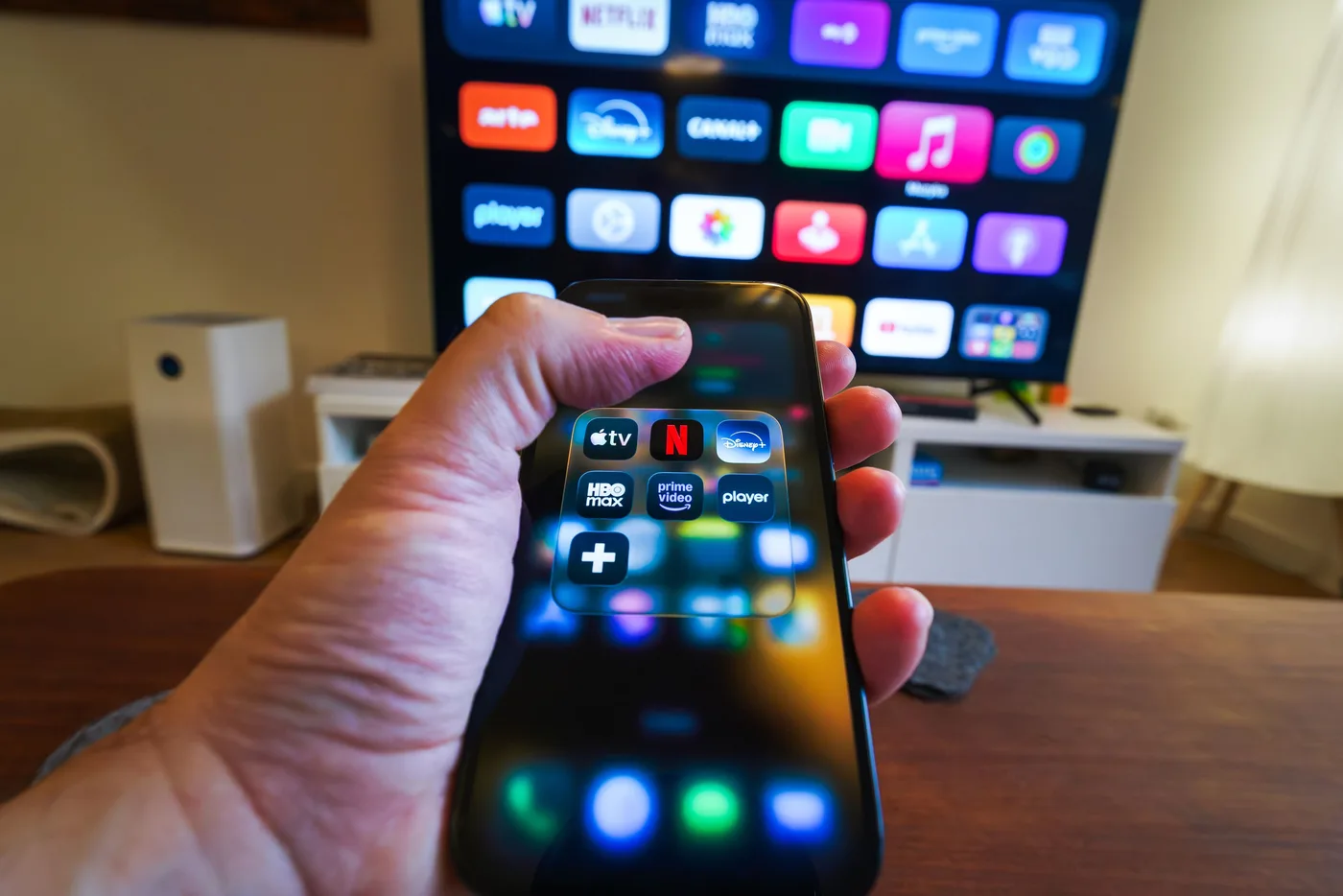
IPTV in one clear definition
Internet Protocol Television is a system for distributing television video using the same family of networking rules that moves web pages, email and other internet data. Instead of tuning a radio-frequency channel from a coaxial feed, a compatible player requests a digital stream. The provider encodes the source, divides it into packets, delivers those packets through private or public networks, and the receiving device reassembles and decodes them into moving pictures and sound.
The word internet in IPTV can be misleading. Some telecom companies deliver IPTV over a controlled broadband network reserved partly for television, while over-the-top services travel across the public internet. Both use Internet Protocol, but the operator has more end-to-end control in a managed system. In ordinary consumer conversation, IPTV has broadened to include most live channel services watched through an internet connection. The exact technical and contractual model matters more than the label.
IPTV is not a specific app, brand, channel package or legal status. YouTube TV is an internet-delivered live television service; a phone network's live channel app also uses internet delivery; a broadband company can operate managed IPTV. An unauthorized seller may use the same technology. Calling all of them IPTV describes transport, not ownership of the programs. Legality depends on licensing and distribution permission, just as it does for cable, satellite and cinemas.
How does Internet Protocol Television work?
- A broadcaster, studio or other rights holder supplies a live feed or stored program to an authorized distributor.
- The distributor compresses video into formats that balance picture quality against bandwidth and creates multiple quality levels.
- Servers package the encoded video into short segments or another stream format and distribute copies through a content delivery network.
- A subscriber's app authenticates the account and requests a live channel, recording or on-demand title.
- The player downloads a small buffer, decodes packets and displays the program while requesting the next segments.
- Adaptive bitrate logic can select a lower or higher representation as measured network conditions change.
Live video begins as a continuous feed, but many modern services transform it into a sequence of small files. A playlist tells the player which segment comes next and where several quality versions are located. The player keeps a few seconds in reserve. More reserve makes brief network variations invisible but adds delay; less reserve reduces latency but leaves less protection against congestion. This tradeoff explains why a streaming game may trail an antenna broadcast and why low-latency modes can be less forgiving.
A content delivery network, or CDN, places copies of popular video near groups of viewers. Without that distributed layer, every household would request data from one origin and long network routes would become bottlenecks. Authentication and digital rights management determine who can open a stream, on which device and for how long. Electronic program guide data supplies schedules and descriptions. Cloud recording stores a subscriber's references or copies at the service rather than on a hard drive beside the television.
What adaptive bitrate streaming does
Providers commonly encode the same moment at several resolutions and bitrates. If throughput falls, the player can request a smaller version instead of stopping completely. If conditions improve, it can climb back to a sharper representation. This adjustment is why picture quality sometimes softens before buffering begins. It is also why a speed test showing a high peak does not guarantee constant 4K: the player's recent sustained measurements, device decoding capacity and provider profile all influence the selected level.
Calculate IPTV internet speed requirements
Plan bandwidth for SD, HD, Full HD, 4K, simultaneous streams, data use, Wi-Fi, and Ethernet.
How IPTV reaches compatible devices
Compare the apps, operating systems, decoders and account rules behind television, mobile and computer playback.
What are the main forms of IPTV?
Live linear television
Live IPTV follows a scheduled channel. Everyone watching a network sees substantially the same program at the same time, though delivery delays differ. News, sports, awards and channel surfing fit this model. Useful features can include pause, restart, multiview and a program guide. Rights are often territorial, so local stations, regional sports and travel access depend on the subscriber's location as well as the selected package.
Video on demand
Video on demand lets the viewer choose a stored movie or episode and begin whenever desired. The service retrieves the requested asset rather than joining a continuous channel. Playback may include pause, seeking, subtitles and multiple audio tracks. A title can still leave a catalog when a license expires. Transactional stores, subscription libraries and free ad-supported libraries use related delivery methods but different payment and advertising models.
Time-shifted television and cloud DVR
Catch-up, restart TV and cloud DVR move scheduled programming away from its original moment. Restart returns to the beginning of a show currently in progress; catch-up exposes selected recent broadcasts; DVR saves chosen programs under retention rules. These features sound interchangeable but rights and controls differ. A provider may allow recording but prohibit fast-forwarding on substituted on-demand versions, or retain programs for nine months rather than indefinitely.
Managed IPTV and over-the-top TV
Managed IPTV is generally delivered by a network operator over infrastructure it controls, sometimes with traffic prioritization and a dedicated set-top box. Over-the-top, or OTT, television crosses an ordinary broadband connection and can work through retail streaming devices. Managed delivery can provide predictable quality, while OTT encourages portability and provider choice. Many consumer services blend elements: they use public internet access, proprietary apps, global CDNs and account rules tied to a home location.
IPTV vs cable: the practical differences
| Question | IPTV / internet TV | Traditional cable TV |
|---|---|---|
| Delivery path | IP packets over broadband and provider delivery networks | Radio-frequency or IP video over a cable operator's managed access network |
| Typical equipment | App on a smart TV, streaming player, phone, computer or optional box | Operator-provided or approved box, CableCARD-era device, or operator app |
| Installation | Usually self-install after broadband is working | May require an outlet, activation and technician visit |
| Mobility | Often works across several device types, subject to home and travel rules | Traditionally television-bound, although cable apps now add mobility |
| Quality control | Depends on provider, public network route, ISP and home network | Operator controls more of the television delivery path |
| Channel navigation | App-based guide, search, profiles and recommendations | Familiar numbered guide and remote, increasingly app-like |
| Recording | Usually cloud-based with retention and rights restrictions | Local or network DVR, often linked to rented equipment |
| Billing | Often month-to-month with separate internet service | Commonly bundled with internet, equipment and promotional terms |
The clean diagram is becoming less clean in practice. Cable operators increasingly encode video as IP and offer streaming-only boxes or apps. Internet services recreate cable's grid guide, bundles and add-ons. The meaningful consumer distinction is therefore not whether a packet exists, but who controls the network, which equipment and contract are required, where viewing is allowed, how the full bill is constructed, and what happens when either the internet or television service fails.
Infrastructure and reliability
A traditional cable television signal can continue when the home's internet data service has a software problem, although both may share physical infrastructure and lose service during a line or power outage. OTT IPTV depends on broadband, DNS, provider authentication, CDN routing, the router, local Wi-Fi and the playback app. That creates more possible failure points but also more options: a phone hotspot may temporarily restore viewing, or a different device can bypass a broken television app.
Cable's managed path does not mean flawless pictures. Signal levels, damaged coax, neighborhood faults and set-top boxes can fail. IPTV's public-internet path does not mean unreliable pictures. A well-engineered service on stable Ethernet or good Wi-Fi can play for hours without interruption. Reliability should be evaluated as an entire chain and measured during real viewing periods, not inferred from the delivery label.
Equipment and installation
Cable has historically required a company box for each television, coax access and equipment rental. Some operators now use compact streaming hardware and app access, reducing that distinction. Internet television can run on hardware the household already owns, but an old smart TV may stop receiving app updates. A separate streaming stick or box often extends its useful life. Neither route is truly equipment-free: IPTV still relies on a modem, router, screen and decoder somewhere in the chain.
What equipment is needed for IPTV?
Map every component from broadband and router to player, display, remote and optional Ethernet adapter.
Channels, bundles and flexibility
IPTV packages can be changed or canceled more easily when sold month to month. Niche services and direct subscriptions make it possible to assemble a smaller bundle. Yet fragmentation creates its own inconvenience: different apps may hold local television, entertainment and sports, with separate bills and interfaces. Cable offers one integrated package and guide, which some households prefer. Internet bundles can become just as large and expensive when every premium option is added.
Picture quality and delay
Both systems can deliver high-definition and 4K programming, but source availability matters. A 4K-capable app cannot invent a 4K live feed. Cable assigns capacity within its network; IPTV dynamically responds to available throughput and can change quality. Internet live streams commonly have more delay than antenna or some cable feeds because encoding, segment creation, buffering and CDN delivery take time. That delay matters for sports alerts and neighboring cheers more than for dramas.
Pricing and contracts
IPTV often avoids television box rental and formal installation, while cable may offer a discounted bundle for television and broadband. Compare the post-promotion cable total with an internet-only quote plus all streaming subscriptions. Include taxes, broadcast or regional fees, add-ons, unlimited data charges, equipment and any early termination obligation. Streaming's financial advantage is strongest when a household selects a focused package and actively cancels services it no longer watches.
Can IPTV replace cable?
Use a household worksheet to compare complete costs, local channels, sports, internet resilience and switching steps.
How is IPTV different from ordinary streaming?
Streaming is the broader action of playing media while data arrives. IPTV is a television-oriented application of network delivery, often featuring live channels, schedules and a guide. Netflix is streaming video but is not usually called IPTV because it offers an on-demand library rather than a linear television service. A live bundle is both streaming and IPTV in common usage. Podcasts, music and user-uploaded clips stream too, but they are not television services.
The distinction is contextual rather than enforced by one global consumer definition. Engineers may reserve IPTV for managed, multicast telecom systems and call public-internet services OTT. Sellers may use IPTV for any channel playlist. Searchers often mean live TV without cable. When comparing offers from a provider such as krooz tv, translate the label into concrete questions: What content is licensed? Is it live or on demand? Which network carries it? What app and device are required? What location and stream restrictions apply?
Unicast, multicast and why the difference matters
Most public-internet video uses unicast: each viewing device establishes its own logical delivery session. A million people watching a final create a million downstream flows, even when CDN caches shorten their routes. Multicast lets a managed network send one stream that routers replicate only where viewers have joined. It is efficient for popular live channels but is not generally available end to end across the open internet. On-demand viewing naturally favors individual sessions because viewers start at different moments.
Consumers do not need to configure these methods, but the distinction explains infrastructure choices. A telecom operator can reserve capacity and multicast linear channels inside its access network. An OTT provider invests in distributed servers, peering and adaptive streaming to serve individualized sessions at scale. Both can present the same guide on screen. What feels like a simple channel change is backed by different request, authorization, routing and buffering behavior.
What do you need to use IPTV?
- A legitimate IPTV or live streaming subscription, free licensed service, or provider account.
- A stable broadband connection with enough sustained capacity for every simultaneous stream.
- A compatible smart TV, streaming player, set-top box, phone, tablet or computer.
- The provider's official app or a compatible player configured with authorized account details.
- A reliable home network, preferably Ethernet for fixed televisions or strong modern Wi-Fi.
- An HDMI display path and suitable audio equipment when using an external player.
The provider may supply a username and password, an activation code, a portal address or another authorized configuration method. Treat these as credentials. Do not publish them, reuse the password elsewhere or install unknown software simply because a message says it is required. Download from official app stores or provider documentation, review permissions, and keep the device operating system and app updated.
Benefits of Internet Protocol Television
IPTV can separate television service from a particular wall outlet and box. The same account may support a living-room screen, tablet and browser, subject to stream limits. Search can span live schedules and recordings. Cloud infrastructure enables restart, personalized profiles and remote DVR management. Competition among providers makes it easier to compare packages and change service. For niche or international audiences, internet distribution can reach interested households without building a local cable system.
Flexibility is not the same as simplicity. Each provider defines supported devices, home location, travel, recordings and simultaneous use. Applications can age out of older hardware. Content moves when contracts expire. A household gains the ability to assemble its own television environment and also assumes more responsibility for broadband, Wi-Fi, account security and subscription management. The benefits are strongest for people comfortable with that trade.
Limitations and risks to understand
An internet outage stops OTT television, and congestion can reduce quality. Data caps may matter in markets where broadband usage is limited. Live streams can lag other delivery methods. Accessibility, captions and audio description vary among apps. Regional rights still block programs even though the network is global. Some services enforce a home area or restrict travel. Customer support may ask the viewer to distinguish provider problems from local network problems, which can be frustrating without a simple test process.
The loosely regulated use of the term IPTV also exposes consumers to unauthorized sellers and malicious apps. Implausibly cheap access to every premium network, anonymous operation, changing domains, sideloaded files and irreversible payment are warning signs. Viewers can face abrupt shutdowns, stolen credentials, malware and no refund path. If you are researching krooz tv or another provider, choose services able to explain their identity and distribution authority, and use normal payment protections.
Reliability and safety checklist for IPTV providers
Assess authorization, infrastructure, policies, support, trials, payment methods and realistic service claims.
A simple example: watching a live game
With cable, the operator receives the network feed, carries it through a managed system and the household box tunes or requests the channel. With OTT IPTV, the app authenticates the viewer, requests a manifest, downloads recent video segments from a CDN and maintains a buffer. If Wi-Fi weakens, the player may choose a lower bitrate. If rights do not include the viewer's region, authentication can deny playback even though the channel appears in another market.
The television experience is similar: open a guide, select the game and press play. Underneath, IPTV permits multiview, personalized overlays and device switching, while adding dependency on multiple software and network services. This example captures the central difference. Cable traditionally packages delivery as a tightly controlled utility; internet television packages it as a portable application. Modern offerings increasingly borrow the best and worst traits of both.
Is IPTV the future of television?
Television distribution is clearly moving toward IP-based systems because software-defined delivery supports many screens, targeted features and efficient on-demand catalogs. Cable companies themselves use IP deeper in their networks and interfaces. That does not mean every cable connection will disappear quickly or every program will enter one global app. Broadband availability, sports rights, local broadcasting, accessibility, business models and consumer preference will sustain a mixed environment.
The useful conclusion is not that one technology wins. Viewers should understand the chain well enough to choose and troubleshoot it. IPTV turns television into networked software: flexible, measurable and updateable, but dependent on connections, licensing, authentication and device support. Cable offers a more bounded service relationship, though it too is becoming software-driven. Compare the actual package and operating model rather than choosing from the acronym alone.
Frequently asked questions
What does IPTV stand for?
IPTV stands for Internet Protocol Television. It describes television video delivered using IP networking instead of relying only on traditional broadcast, satellite or radio-frequency cable distribution.
Is Netflix considered IPTV?
Netflix uses internet streaming, but consumers and providers usually describe it as subscription video on demand rather than IPTV because it does not center on a scheduled live channel bundle. Definitions vary, especially in technical contexts.
Does IPTV require a cable box?
No traditional cable box is required. IPTV needs a decoder, but that can be an app inside a smart TV, streaming stick, set-top box, phone, tablet or computer. An external device is often useful when a television is old or unsupported.
Can IPTV work without the internet?
Public-internet IPTV cannot receive new live or on-demand data without a connection. Previously downloaded programs may play offline if the service explicitly supports downloads. Managed telecom IPTV also depends on the provider's IP network even if it is separated from ordinary web access.
Is IPTV better than cable?
IPTV is better for viewers who value flexible devices, self-installation and package choice. Cable may be better for someone who wants one managed bundle, a familiar guide or service that is less exposed to home Wi-Fi issues. Content and total cost usually decide the answer.
Is IPTV legal in the United States?
Yes, the technology is legal. A particular service is lawful when it has permission to distribute its channels and programs. IPTV does not make copyrighted programming free to redistribute, so consumers should choose transparent, authorized providers.
Need help next?
See how an IPTV subscription is presented
Explore krooz tv plan options, then confirm current content, device, connection and policy details before choosing a subscription.
Explore subscriptions